Edge Computing in 2026: Why Your Data Is Moving Closer to You
For the last decade, the rule of the internet was simple: send everything to the cloud. Your photos, your shop's sales data, your factory's sensor readings — all of it travelled to a giant data centre, often on another continent, got processed there, and travelled back. It worked. But it was never fast, and in 2026 a growing share of computing is quietly moving in the opposite direction: closer to where the data is created. That shift is called edge computing.
It sounds like a buzzword. It isn't. It is already deciding how fast your apps respond, how self-driving systems react, and how modern factories and hospitals run. Here is what it actually means — in plain language.
What Is Edge Computing, in Simple Words?
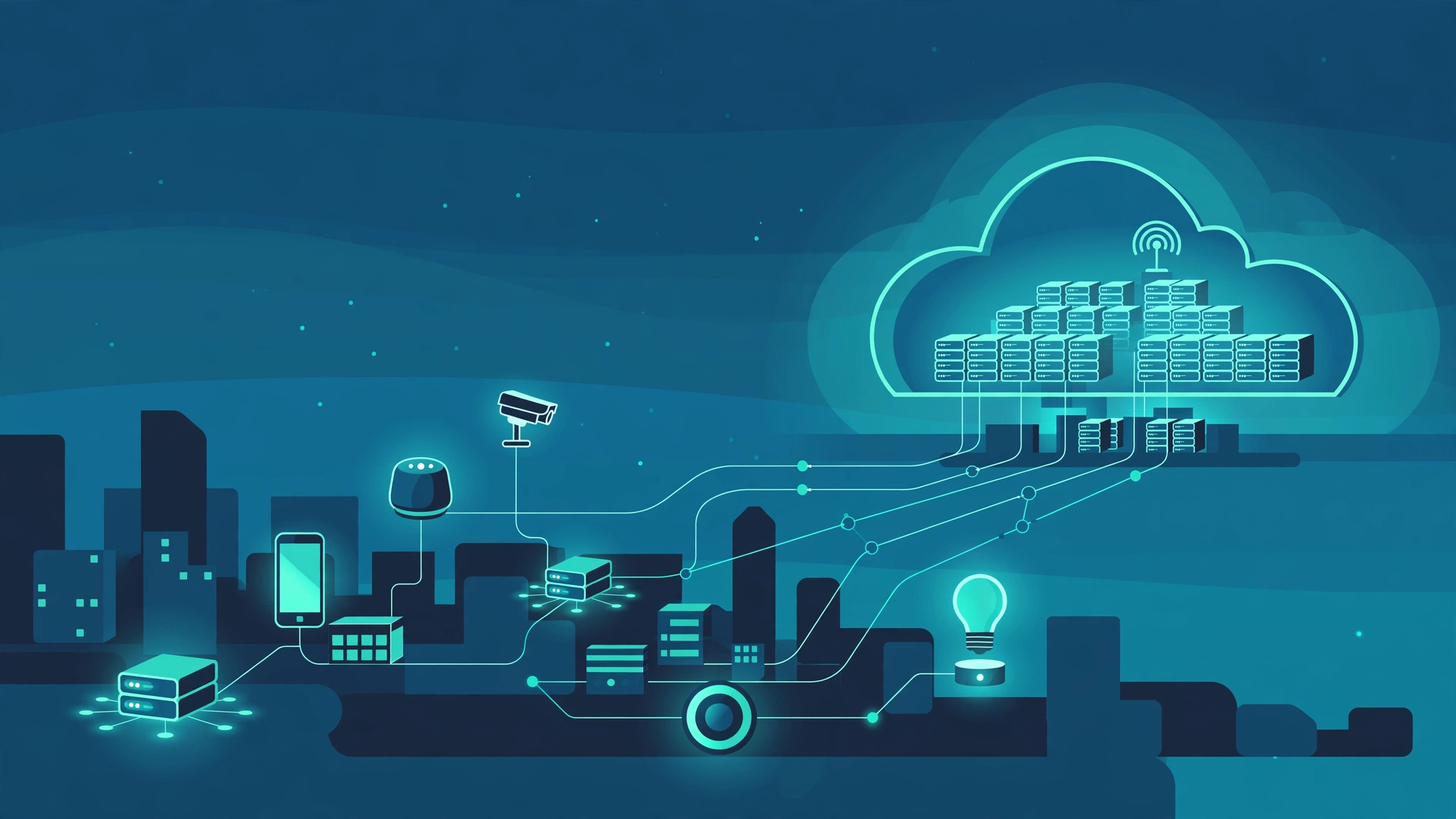
Edge computing means processing data near its source — on the device itself, or on a small nearby server — instead of sending everything to a distant cloud data centre.
Think of it like a restaurant. The cloud is one enormous central kitchen serving an entire country: efficient, but every meal travels a long way. Edge computing puts a small kitchen in every neighbourhood. Most orders are cooked locally and served in minutes; only the complicated ones go to the central kitchen.
In practice, the "edge" can be many things:
- The device itself — your phone recognising your face without asking a server.
- A local gateway or mini-server — a box in a factory or shop that processes data on site.
- A regional edge data centre — much smaller than a cloud giant's facility, but located in your city instead of another continent.
Edge vs Cloud: What's the Real Difference?
The cloud is not disappearing — edge computing works with it, not against it. The difference is about which jobs happen where:
- Speed (latency): Data travelling to a faraway data centre and back takes time — often 100 milliseconds or more. Edge processing can answer in under 10. For a video call that difference is invisible; for a braking self-driving car or a robot arm, it is everything.
- Bandwidth cost: A single factory can generate terabytes of sensor and camera data a day. Sending all of it to the cloud is expensive. The edge filters it locally and sends only the summaries and alerts.
- Reliability: If the internet connection drops, a pure-cloud system stops. An edge system keeps working locally and syncs later.
- Privacy: Sensitive data — faces, health readings, payment details — can be processed on site and never leave the building, which makes privacy rules far easier to follow.
The pattern most companies now follow is a hybrid: the edge handles the urgent and the heavy, the cloud handles the deep analysis and long-term storage.
Why Is Edge Computing Taking Off Now?
The idea is old. Three forces made it practical at scale:
- An explosion of connected devices. Phones, cameras, vehicles, wearables and industrial sensors now generate far more data than networks can cheaply carry to the cloud.
- 5G and faster local networks. High-speed, low-latency connections make small local computing nodes genuinely useful rather than a bottleneck.
- AI moving onto devices. Modern AI models increasingly run at the edge — a security camera that spots an intruder by itself, a phone that transcribes speech offline. This is the same AI wave reshaping how software itself is built, now reaching the physical world.
Real-World Examples You Already Use
- Streaming and gaming: Video platforms cache popular content on edge servers near you — that's why a stream starts instantly instead of buffering from another continent.
- Healthcare: Hospital monitors and imaging devices process patient data locally for instant alerts, while the cloud stores records. It's one of the areas where AI in healthcare is delivering real results today.
- Factories: Cameras inspect products on the line and reject defects in milliseconds — far too fast for a cloud round-trip.
- Retail: Smart shelves, self-checkout systems and in-store analytics run on local edge boxes, so a network outage doesn't stop the tills.
- Vehicles: Driver-assistance systems make split-second decisions on board. The cloud trains the models; the car itself does the driving.
What Does Edge Computing Mean for Small Businesses?
You will probably never buy an "edge server" — and you don't need to. Edge computing reaches small businesses through the services they already use:
- Faster websites: Modern hosting and CDN platforms serve your site from edge locations near each visitor. If your pages feel slow for overseas readers, an edge-cached host or CDN is the cheapest fix — and speed is a ranking factor, as our SEO checklist for new websites explains.
- Better point-of-sale and security systems: Cloud cameras and tills that keep working during outages are edge devices in disguise.
- Cheaper cloud bills: As providers move processing closer to users, the apps you rent get faster without you changing anything.
The honest limit: edge adds complexity. More locations means more systems to secure and update, and for most small websites and apps, a good cloud setup with a CDN already captures most of the benefit. Edge matters most when milliseconds, bandwidth or offline reliability genuinely matter.
Frequently Asked Questions (FAQs)
Will edge computing replace the cloud?
No. The two are partners, not rivals. The edge handles fast, local, urgent processing; the cloud handles heavy analysis, training AI models and long-term storage. Almost every modern system uses both.
Is edge computing the same as a CDN?
A CDN (content delivery network) is one early form of edge computing — it caches content near users. Today's edge goes further: it runs actual applications and AI models near users, not just stored files.
Do I need edge computing for my website or small business?
Indirectly, you already use it. If your host or CDN serves pages from locations near your visitors, that's the edge working for you. Dedicated edge infrastructure only becomes necessary for real-time applications, large device fleets, or strict data-privacy requirements.