AI in Healthcare: What's Actually Working (and What's Just Hype)
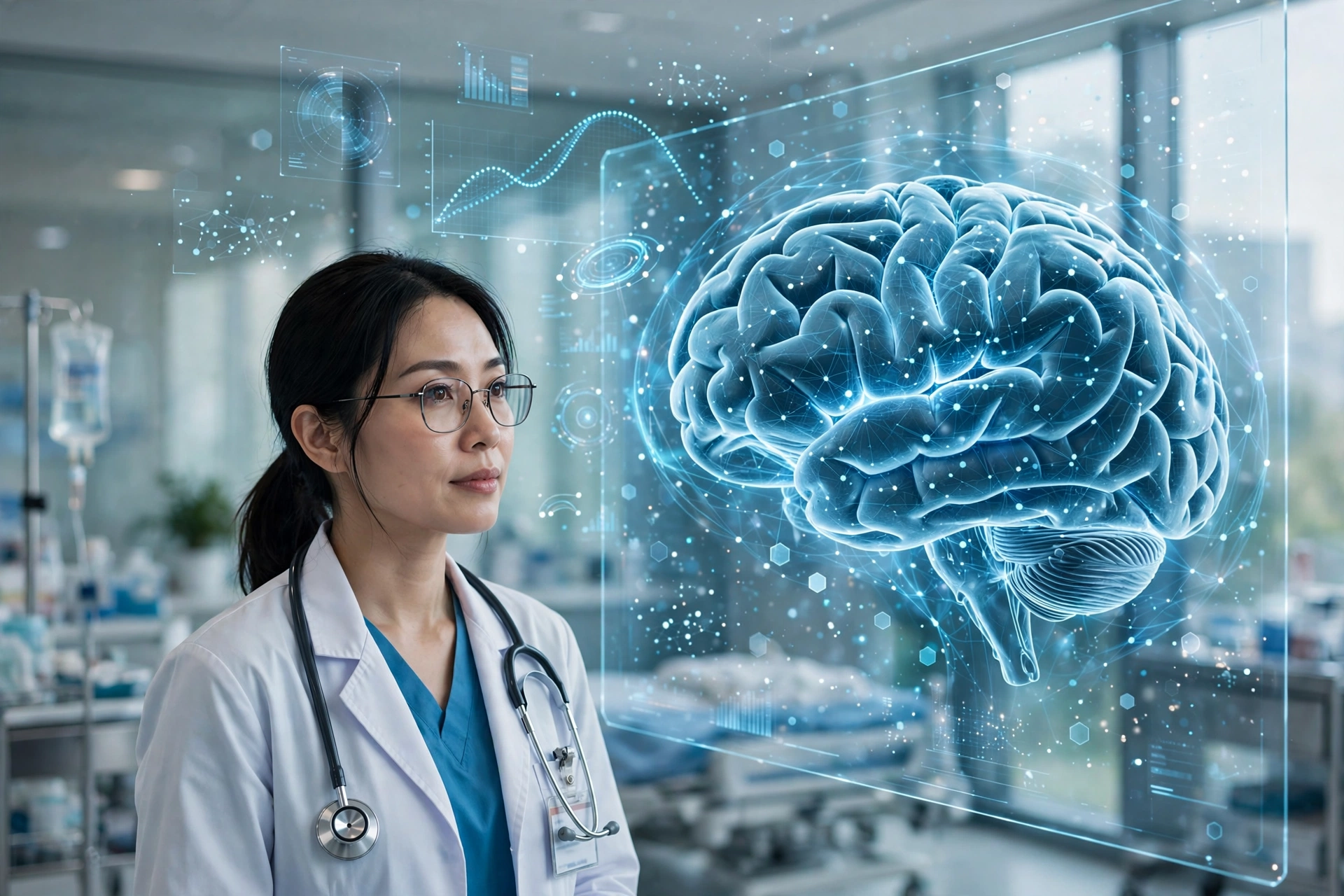
Every few months, a headline declares that AI will replace doctors. Then nothing much changes at your local clinic, and you wonder if the whole thing was hype.
Here's the honest version: AI is changing healthcare in real, meaningful ways — just not the dramatic ways the headlines suggest. No robot doctors. No miracle cures discovered overnight. Instead, it's doing something less flashy but arguably more important: quietly making the existing system work better.
Let's separate what's real from what's marketing.
What's Actually Working Right Now
1. Reading Medical Scans
This is AI's biggest real win in healthcare so far. Algorithms trained on millions of X-rays, MRIs, and CT scans can now flag things like early-stage tumors, fractures, and eye disease — sometimes catching what a tired radiologist might miss at 2 AM.
The key word is flag. The AI doesn't make the diagnosis. It highlights suspicious areas, and a human doctor makes the call. Think of it as a very thorough second pair of eyes, not a replacement.
2. Cutting Down Paperwork
Doctors spend a shocking amount of time on documentation — typing notes, filling forms, updating records. AI-powered "scribes" now listen to patient visits (with consent) and draft the clinical notes automatically.
This sounds boring. It's not. When a doctor spends less time typing, they spend more time actually looking at you. Some clinics report doctors getting over an hour back per day. That's real.
3. Speeding Up Drug Discovery
Finding a new drug traditionally takes a decade and billions of dollars, mostly because researchers have to test thousands of chemical compounds to find a few promising ones. AI can screen virtual compounds far faster, narrowing the field before expensive lab work begins.
It hasn't produced a miracle drug yet. But it's genuinely shortening the early stages of research, which matters when the next pandemic hits.
4. Predicting Who Needs Help First
Hospitals sit on mountains of patient data. AI models can scan it to predict which patients are most likely to deteriorate, miss appointments, or end up back in the ER — so staff can intervene early instead of reacting late.
This is unglamorous backend work. Nobody writes headlines about it. But catching a high-risk patient a day earlier can be the difference between a routine checkup and an ICU stay.
Notice who's last in the chain. That's not an accident — and it's not changing anytime soon.
What's Mostly Hype (For Now)
🚫 The Hype
- "AI doctors" replacing physicians
- Chatbots diagnosing your illness accurately
- AI discovering miracle cures overnight
- Fully automated hospitals
✅ The Reality
- AI assists doctors — final call stays human
- Symptom checkers are rough guides, not diagnoses
- Drug discovery is faster, but still takes years
- Automation handles admin, not patient care
The most honest cautionary tale here is IBM Watson. Back in the 2010s, it was the symbol of AI in healthcare — supposed to revolutionize cancer treatment. It didn't. The system struggled with real-world medical complexity, and IBM eventually sold off its Watson Health business. The lesson wasn't that AI is useless in medicine. It's that the boring, incremental applications beat the grand visions every time.
What This Means for You as a Patient
Practically speaking? Three things.
First, your scans and test results are increasingly getting an AI second opinion behind the scenes — and that's good news for accuracy.
Second, don't trust a chatbot with a serious diagnosis. They're fine for "should I see a doctor about this rash?" They're not fine for "what's wrong with me?" Always get a human professional for anything that matters.
Third, the biggest near-term change you'll actually feel is less waiting and less paperwork. AI scheduling, AI triage, AI documentation — the unsexy stuff that makes a clinic visit slightly less miserable.