
The Next 5 Years: War, AI, Climate Change — and a Survival Plan for Ordinary People
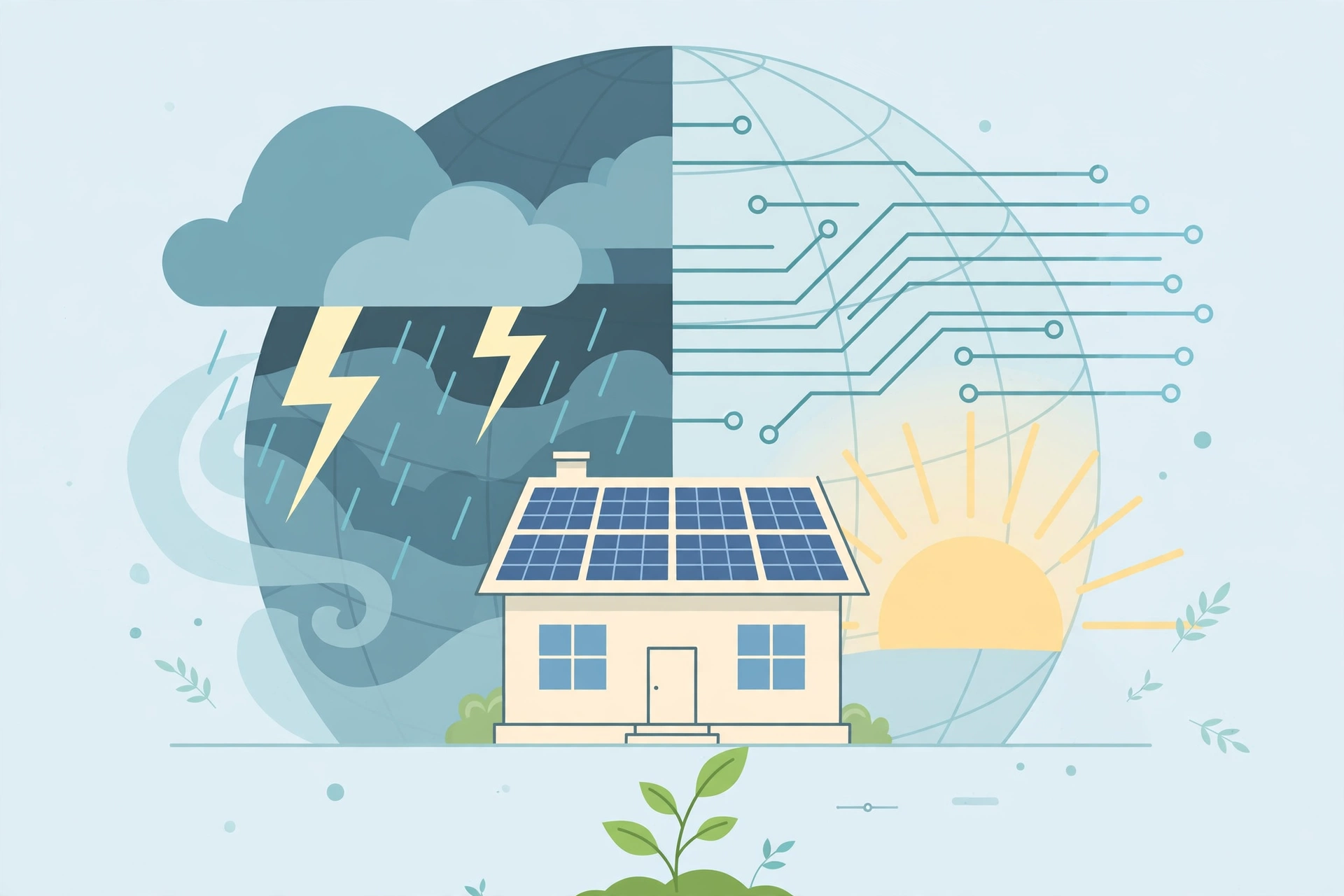
The world is standing at a strange crossroads. Fire, water and technology are all changing the direction of our lives at the same time. Wars are running in the Middle East and Europe, powerful countries are fighting over new trade routes, and quietly — without any battlefield — artificial intelligence is rewriting the global economy. On top of all of this, climate change has stopped being a warning about the future. It is a reality of the present.
In times like these, the important question for an ordinary person is not "what is going to happen?" Nobody can answer that. The real question is: "How do I keep myself and my family safe for the next five years?"
This article is an honest, no-panic look at the three big forces reshaping the world — and a practical survival plan built on four pillars.
1. Wars and the Fight Over New Trade Routes
The world has slipped back into "bloc politics". Tension between Israel and Iran in the Middle East, Russia's growing influence, and China's grip on global markets through new trade routes like the Belt and Road are all direct challenges to America's long-held position at the top. None of this looks like it will settle quickly.
What it means for you: as long as these tensions last, the global supply chain stays under pressure. Expect sudden jumps in the price of petrol, gas and food. Local economies are no longer strong enough to absorb these shocks quietly, so they arrive in your home as one thing: inflation. Your salary stays the same while everything it buys gets more expensive.
2. The AI Revolution and the Economic Shake-Up
The wild swings in the value of giant companies — from Google to major crypto exchanges — are proof that the economy itself is shifting. AI has already removed many kinds of jobs. But the same technology has also laid the foundation of two new economies: the creator economy and the digital asset economy, where a single person with a laptop can earn from the whole world.
What it means for you: anyone whose income depends on one physical market or one local employer's mood is exposed. In the next five years, the contest will not be human versus machine. It will be the person who knows how to use AI against the person who does not. That single difference will decide who moves forward and who gets left behind.
3. Climate Change: The Quiet Disaster
Wars can, at least in theory, be stopped around a table. Climate change does not attend meetings. From Europe to Asia it is already leaving its marks: careless carbon emissions and a rising global temperature are setting up the biggest disruption of the coming years.
What it means for you: extreme heat, floods in the wrong season — and above all, a crisis of water and energy. As harvests shrink, food insecurity grows, and in big cities even the basic systems of daily life come under strain. This is the slowest of the three forces, but it may be the one that touches your home first.
The 5-Year Survival Plan: Four Pillars
In uncertain times, survival does not belong to the strongest. It belongs to whoever adapts the fastest. Build the next five years of your life on these four pillars.
Pillar I: Borderless Income
Never let your whole income depend on one country's economy.
- Digital skills and AI mastery: turn AI tools — video generation, prompt writing, digital marketing — into your working weapons. Start digital projects, a blog, or tech content that can reach a global audience, not just your own street. This is exactly the path laid out in The Quiet Comeback, our guide to rebuilding income step by step.
- Earn some foreign currency: try to make at least part of your income arrive in dollars or euros. When the local currency falls, that foreign income becomes your lifeline — as we have shown, the right AI tools that save small businesses hours every week can help a very small operation punch far above its weight.
Pillar II: Understand Mass Psychology — and Keep Your Mind Steady
In a crisis, fear and manipulation spread faster than facts. News and media push you toward panic, because panic gets attention.
- Learn how crowds behave: understand the basics of mass psychology and dark psychology — how fear makes people decide. Once you know how it works, you stop making panic decisions yourself: no panic selling, no panic buying, and no becoming a free soldier in someone else's propaganda.
- Mental steadiness is the real strength: in the next five years, a calm mind that can wait, verify, and then act will be worth more than almost any physical asset.
Pillar III: Protect the Basics — Energy and Assets
Political and climate problems hit two things first: the electricity grid and water.
- Plan for alternative energy: if you can, start planning a shift to solar for your home or workplace — even gradually. Being independent in energy is becoming a necessity, not a luxury.
- Do not keep everything as cash: inflation quietly eats cash sitting in a bank. Keep part of your savings in things that hold their value over time — hard assets or carefully chosen digital assets — instead of letting all of it melt in one account.
Pillar IV: Your Local Community
When global systems break, survival is always local. Build strong connections around you — family, neighbours, people you can trust. A single person breaks in a crisis; a connected community shares resources, information and help, and comes through it far better. Your network is not a social luxury. It is part of the plan.
The Bottom Line
The next five years are full of dangers — that part is true. But they are also full of openings for the people who read the direction of technology and the times early, and change their path today instead of tomorrow. You do not control wars, markets or the weather. You do control your skills, your income sources, your energy, and the people around you. Start with one pillar this week. That is how ordinary people get through extraordinary times.